

Clint Eastwood Directed An Underrated Music Biopic About One Of The World's Best Musicians

Jazz may be regarded as one of the great American art forms, but it remains a mystery for those who aren't familiar with its improvisational style. I confess that it's not really my bag; I've dabbled with Thelonious Monk and I'm one of many millions who paid actual money for Miles Davis's "Kind of Blue," but I failed in my attempt to love it. Even so, I still like the idea of jazz, and I was curious to check out "Bird," Clint Eastwood's underrated biopic of one of the world's best musicians.
His subject is Charlie "Bird" Parker, the self-taught saxophone prodigy who went on to revolutionize the bebop style and lay the groundwork for how modern jazz sounds today. He passed away aged just 34 after a hectic life fraught with drug addiction and mental health issues, but, even 70 years after his death, his legacy remains so strong that even non-jazz people probably know the name, even if they've never listened to his music.
Eastwood is old enough to have actually seen Parker play live back in 1946, and the actor and filmmaker is one of Hollywood's highest-profile jazz fans. A Parker biopic was percolating since the 1970s with Richard Pryor tentatively attached to play the lead role, but Eastwood nixed that idea after he convinced Warner Bros. to pick up the rights. He felt that casting a stand-up comedian would necessitate some jokes to keep audiences happy. When he finally got around to making it one of his more personal projects in the late '80s, Eastwood had the clout to turn "Bird" into the kind of homage he wanted to make, and he also had the perfect actor to carry it off.
Forest Whitaker is sensational as Charlie Parker
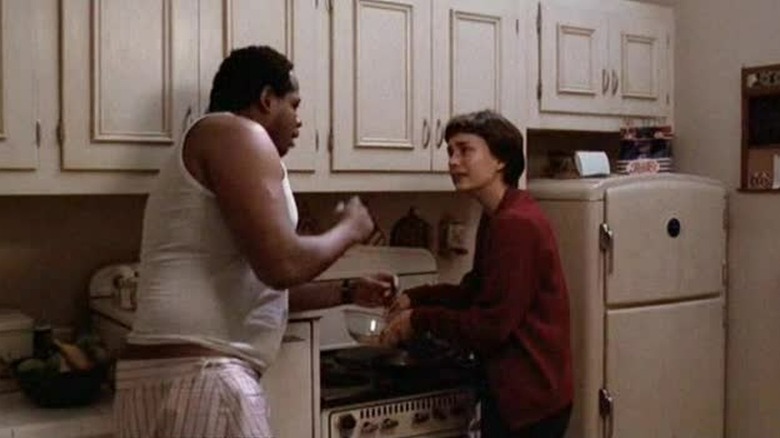
Hopping back and forth through Charlie Parker's short lifespan, Clint Eastwood's "Bird" ditches the traditional structure of a Hollywood biopic. There is little for the uninitiated to cling to narratively as we dart from Parker's early experiences as an ambitious youngster in jazz clubs to his triumphant status as a revolutionary musical genius. Along the way, we get an insight into his uneven but loving family life, his time on the road, his drug addiction, his trouble with the cops, his attempt on his own life, and finally his death. And jazz, lots of jazz.
At the film's core is Forest Whitaker in his first starring role, and he's astonishing. Whether playing in quirky indie features like "Ghost Dog: The Way of the Samurai" or blockbusters like "Rogue One: A Star Wars Story," he's an actor who always seems to move at a slightly different rhythm to those around him, and this elusive quality makes him a great fit for Parker. He barely speaks above a whisper throughout the movie but he's absolutely riveting, capturing the mercurial musician's erratic joie de vivre along with his propensity for self-destructive darkness. Whitaker energetically mimes the jazz solos (brilliantly incorporated with original recordings from the late Parker himself) and the illusion is faultless.
It may well be Whitaker's finest performance and it remains a mystery why he didn't receive an Oscar nod after deservedly winning Best Actor at Cannes — perhaps it's because Parker enjoyed greater adulation in France than he received back in the States during his lifetime. Award snubs aside, the film is Whitaker's show, although Diane Venora is also superb as Chan Parker. She delivers a coolly measured characterization that avoids the usual pitfalls of the long-suffering wife role.
Bird is a challenging film, but it's worth the effort
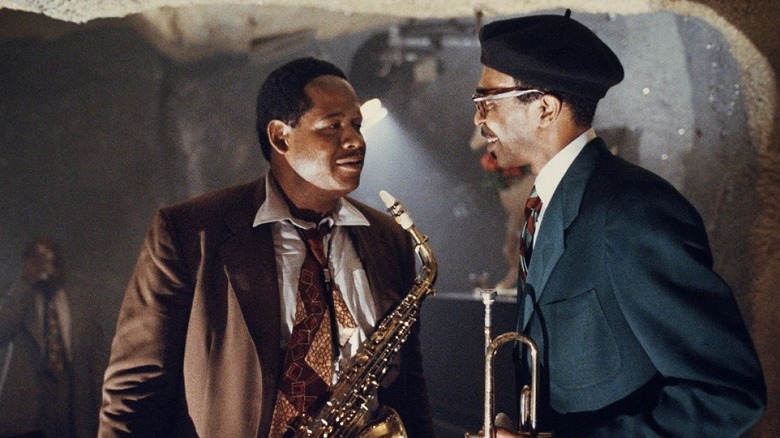
Perhaps unsurprisingly given its niche topic, "Bird" fell on deaf ears when it was released in 1988, and Clint Eastwood certainly didn't make it easier for audiences with the uncompromising style he adopts. Eastwood's approach is usually straightforward to the point of appearing almost workmanlike, aiming a camera at the actors to capture their performances and telling a story with as little fuss as possible. There is little room for artistic flourishes in an Eastwood film. Perhaps inspired by his subject, however, "Bird" is a freewheeling departure from his usual style, and the result is both exciting and confounding.
The seasoned director cuts loose with over more than two-and-a-half hours of bustling vignettes. At times, it isn't even clear where we are in the chronology of Parker's life. Eastwood doesn't hold your hand, either; if you're not familiar with this world, it can feel like overhearing strangers discussing something you're not involved in. That's a brave choice from the filmmaker, but it pays off if you're up for the challenge. In many ways, "Bird" reminds me of François Girard's brilliant "Thirty Two Short Films About Glenn Gould," which also eschewed any conventional narrative sense in order to present a more expressionistic take on a talented musician. Stripped of the usual biopic beats, these bursts of character and incident have a cumulative effect, coalescing into a rich portrait of a fascinating artist at a very particular time in American history.
Eastwood followed up with two more flops ("White Hunter Black Heart" and "The Rookie") before "Unforgiven" rescued his career, but "Bird" shows he reached full filmmaking maturity and sophistication before that Oscar-winning success. It's also one of Forest Whitaker's best movies to date.