

The Oscar-Winning Movie Steven Spielberg Wishes He Hadn't Passed On Making
Steven Spielberg has always helmed fantastic stories. Take his theatrical debut, "Duel," as an example, where a salesperson is inexplicably terrorized by a dilapidated tanker truck in the Mojave Desert. It is a film that anticipates Spielberg's most valuable directorial instincts, including the ability to turn a barebones premise into something kinetic and spectacular. After all, everything from "Jaws" to "Close Encounters of the Third Kind" tackles popular tropes, but it is the Spielbergian touch that ultimately makes all the difference. The result is an auteur capable of creating deeply moving and entertaining movies, some of which also make bank at the box office.
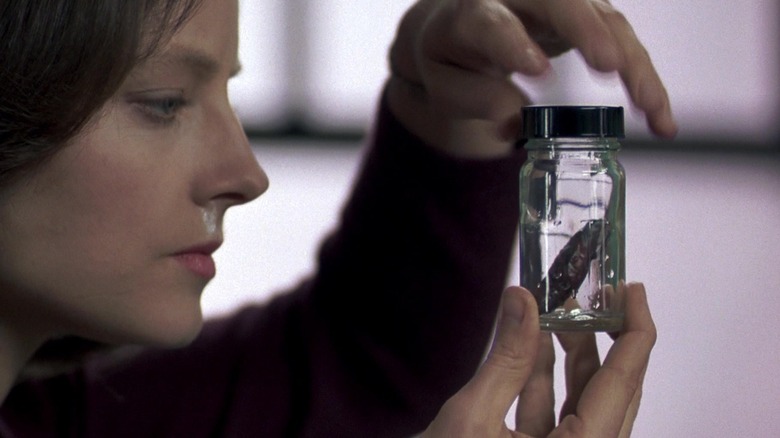
But someone with the ability to kickstart an iconic (and widely beloved) franchise like "Jurassic Park" also runs the risk of being misunderstood or typecast. In a conversation with the Los Angeles Times in 1993, Spielberg said that he wished he had directed Jonathan Demme's "The Silence of the Lambs," and why his company (Amblin Entertainment) had passed on it:
"After I saw 'The Silence of the Lambs,' I thought, 'I wish I could have made that.' The material had actually come to us, but my company passed on it because they felt it wasn't in character. We've spent so many years in a cinematic mindset here that even my staff tends to pigeonhole me."
Spielberg has proven time and again that he's capable of making more than special effects-heavy spectacles or action-packed crowdpleasers. For context: Demme's Oscar-winning film was released in 1991, while Spielberg's "Schindler's List" made it into theaters in December of 1993, which is exactly when the LA Times interview was conducted. In hindsight, "Schindler's List" alone counters Amblin's assumptions about Spielberg at the time, but subsequent entries, such as "Amistad" and "Catch Me If You Can," completely invalidate these notions.
Steven Spielberg has always had a knack for suspenseful crime thrillers
Spielberg's interest in directing a crime procedural like "The Silence of the Lambs" isn't surprising. You see, Spielberg was initially slated to direct a gritty psychological thriller instead of "Schindler's List." This was 1991's "Cape Fear," which he later swapped with fellow auteur Martin Scorsese, who was supposed to helm the Holocaust drama. Despite not being involved in directorial duties, Spielberg was an (uncredited) executive producer for "Cape Fear," which denotes his strong interest in the genre.
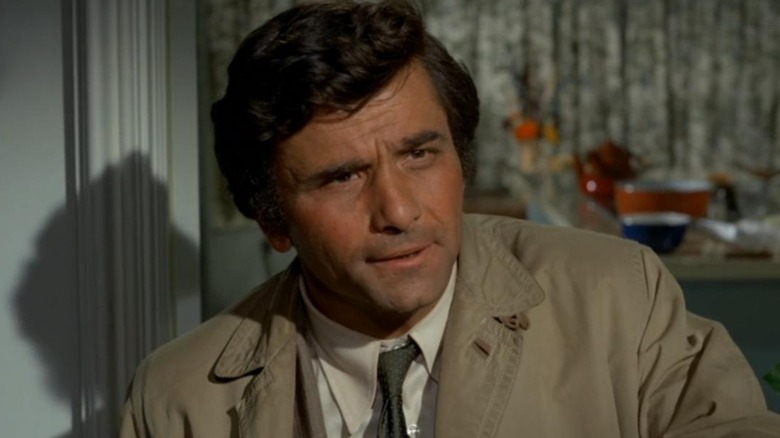
While Spielberg hasn't worked on a full-blown crime procedural à la "The Silence of the Lambs," he dabbled in the genre while directing the series premiere of "Columbo," which set a very high bar for the rest of the show. It is a brilliant first episode that changed how television episodes were shot, as Spielberg treated it as a mini-movie worthy of inspired cinematic flourishes (which was rare at the time).
If you look at a creature feature like "Jaws" or even his early 2000s work like "Minority Report," there are elements that mimic the most suspenseful aspects of thrillers. What's more, Spielberg invests his characters with psychological depth, which reveals itself alongside escalating suspense and high-octane action. Heck, "Jaws" is a police procedural embedded deep into a film about human greed/hubris, while still operating as a riveting tale about a killer shark that goes on a mad rampage. On the other hand, "Minority Report" directly deals with pre-crime technology, setting up a classic protagonist-foil dynamic that culminates in a manhunt deciding the fate of the world as we know it.
While Spielberg might not be as compelled to direct something like "The Silence of the Lambs" today, there's comfort in knowing that he can, and will, make whatever tickles his fancy.