

Why Francis Ford Coppola Believed The Godfather's Success Ruined His Career
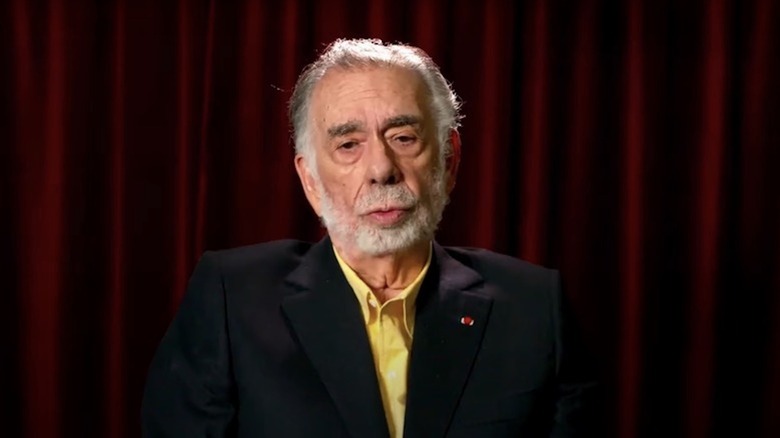
Francis Ford Coppola's relationship with "The Godfather," the film that turned him into a filmmaking icon and earned him his first Academy Award (for Best Adapted Screenplay, which he shared with Mario Puzo), has always been complicated. The first film was an offer the promising director, who had yet to direct a box office success, couldn't refuse. Ultimately, he warmed to the project when he realized it could be a family-focused saga instead of a tawdry gangster flick, but finishing the movie on his own terms nearly broke him.
The making of "The Godfather" is such an intriguing story that Paramount+ made a television series about it. Coppola courted disaster by casting the notoriously mercurial Marlon Brando, allowing director of photography Gordon Willis to give the film a chiaroscuro aesthetic, and generally pushing back against studio notes. He didn't want to make this movie in the first place, but now that he'd found a way to imbue it with a tragic Sicilian soul, he wasn't about to let the suits force him to compromise.
Coppola triumphed. The film won the Oscar for Best Picture, and spawned a sequel that earned him his first Best Director trophy. The first movie gave him leverage to make "The Conversation," a brilliant thriller that no studio would touch (one that Paramount greenlit only if he promised to direct "The Godfather Part II"), and set him down a path toward his magnum opus "Apocalypse Now" (which many of your favorite directors consider to be the greatest film of all time). Nevertheless, Coppola believes "The Godfather" ruined his career. I'm not sure this tracks, but let's hear the maestro out.
Coppola regrets the success of The Godfather
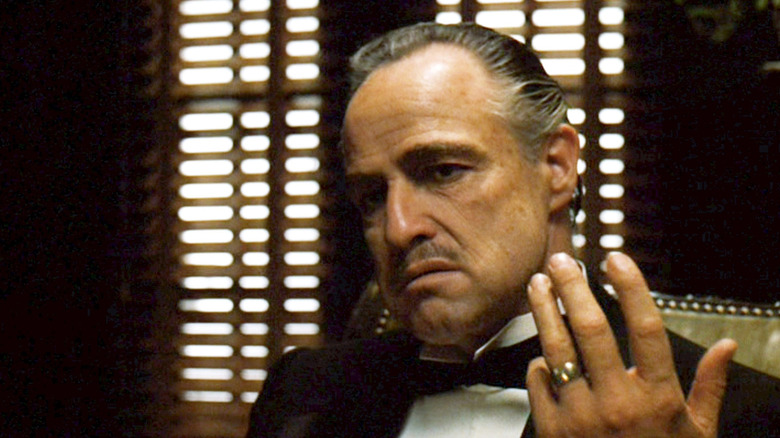
In a 1997 New Yorker article pinned to the 25th anniversary of "The Godfather," Coppola expressed regret over how the movie sidetracked him as an artist. Per the filmmaker:
"It just made my whole career go this way instead of the way I really wanted it to go, which was into doing original work as a writer-director. It just inflamed so many other desires. After 'The Godfather,' there was the possibility of having a company that could one day evolve into a real major company and change the way we approach filmmaking."
In other words, "The Godfather" was too successful as a for-hire work. In turn, it gave Coppola the insane confidence to launch Zoetrope Studios, a gamble that came up snake eyes when the company's first movie, the wonderful and deeply misunderstood "One from the Heart," bombed — a desire he hadn't entertained early in his career. "The great frustration of my career is that nobody really wants me to do my own work," he said.
No one put a gun to Coppola's head and forced the dream of Zoetrope on him. Then again, no one was going to finance a movie like "The Conversation" if there wasn't another "Godfather" film, or something of that magnitude, coming down the pike. In Coppola's mind, he couldn't win even when he was clearly winning.
Making The Godfather was an awful experience for Coppola
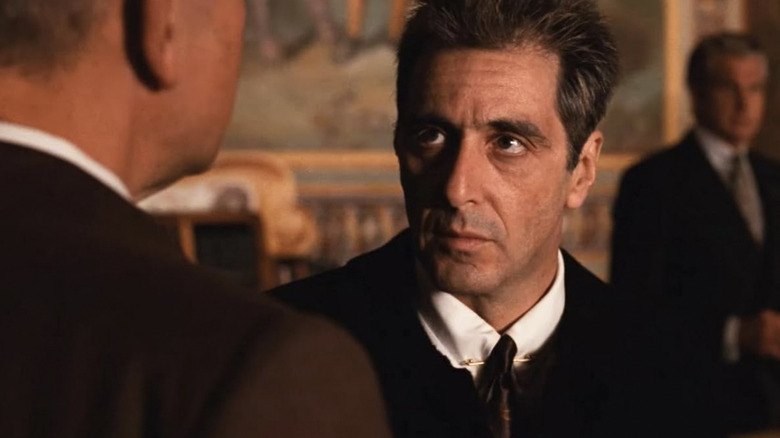
Coppola has revisited "The Godfather" saga many times throughout his career. Five years ago, he refashioned the flawed "The Godfather: Part III" as the shorter "The Godfather Coda: The Death of Michael Corleone." It's a superior work (save for the abrupt opening), but it's still an extension of a creative experience that Coppola loathed. As he told The New Yorker:
"I don't take a lot of pleasure in anything to do with 'The Godfather.' I love the cast, and I think the film definitely brought out something, but it was a terrible period in my life. I had two little kids and a third on the way, I was living in this borrowed apartment, and at one point my editor told me that nothing was any good. It was a total collapse of self-confidence on my part; it was just an awful experience. I'm nauseated to think about it."
It's strange to complain about a struggle that vaulted you to the forefront 1970s cinema, but Coppola is a confounding man, as evidenced by his batty, self-funded 2024 epic "Megalopolis." If you've seen the documentaries "Hearts of Darkness: A Filmmaker's Apocalypse" and "Megadoc," this shouldn't come as a surprise. Still, it smacks of sour grapes. Coppola took great big swings and missed on occasion, much to his professional detriment, but he still made the movies he wanted to make. Very few filmmakers can claim this.