

How Real Was The Original Faces Of Death Movie?
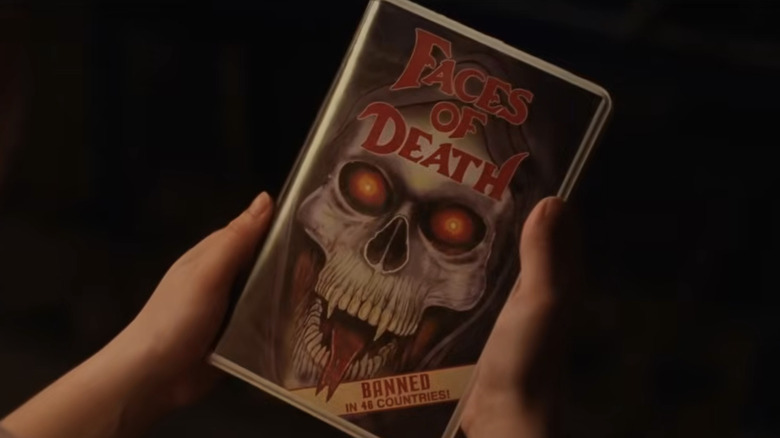
The first "Faces of Death" movie was instantly notorious when the late John Alan Schwartz released it in 1978. "Faces of Death" was a part-documentary "mondo" movie that collected supposedly real footage of actual deaths (both animal and human) and assembled it into the world's most disturbing montage film ever made. The movie was hosted, Cryptkeeper-style, by Francis B. Gröss, a pathologist character played by Michael Carr. Its premise was that this Gröss fellow had become fixated on the moment that life becomes death and had assembled a macabre sizzle reel to study the phenomenon. We, the audience, got to watch the deaths he captured on camera.
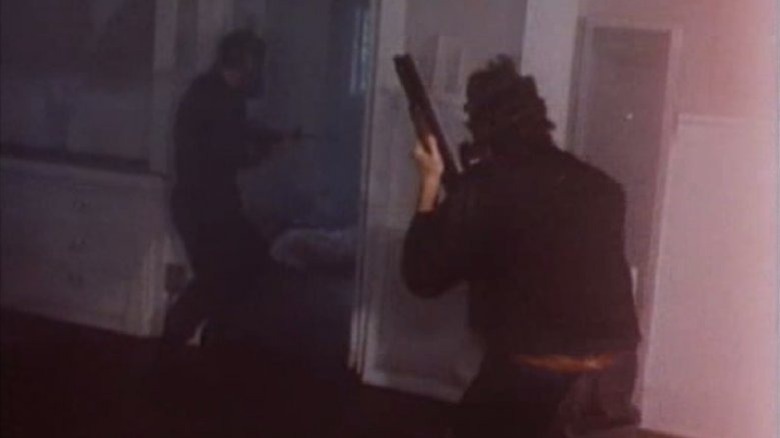
"Faces of Death" includes footage of a cannibal cult, a police shootout, an interview with an assassin, animals dying, World War II atrocities, bodies in coffins, and surgical operations. It's all very gruesome and is designed specifically to shock. It should be noted that "Faces of Death" was, at the time of its initial release, the latest entry in the subgenre of Mondo Movies, which got their name from the 1962 documentary "Mondo Cane" (aka "A Dog's Life") and were documentaries dealing with cultural taboos and "shocking" behavior. The "shock doc" subgenre thrived underground for many years, returning with "Faces of Death" in the late '70s.
But to state it clearly: "Faces of Death" special makeup effects artist Allan A. Apone estimates that 60% of the film is stock footage (via The Telegraph), while a lot of the more explicit sequences were staged. Because of the low-res camerawork on "Faces of Death," and because of its mixture of staged and documentary footage, many cult film adventurers have come to believe that it's all real. As such, "Faces of Death" has been speculated about for decades, and many refuse to watch it.
Faces of Death combines stock footage with staged violence
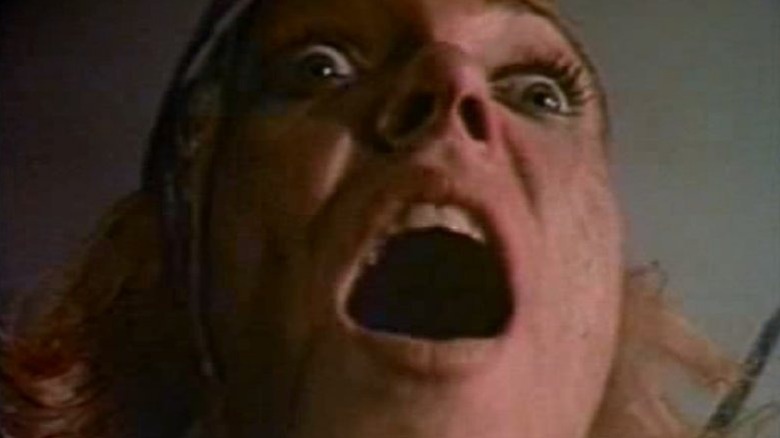
To restate for clarity: Most of the gnarly scenes in "Faces of Death" are staged. Fore example, while speaking to Deadspin in 2012, John Alan Schwartz noted that scenes like the one where someone kills a monkey and then eats its brains were, in fact, fake. "Cauliflower for the brains," Schwartz recalled. "Theater blood for the blood." However, to warn the more squeamish viewers out there, there is some authentic documentary footage of animals dying.
Indeed, there are scenes of a cow being slaughtered, an actual slaughterhouse, and a chicken being beheaded, all of which are authentic. Schwartz went on record via Cine-Excess to explain that the slaughterhouse footage was captured at both a real meat-packing plant in Vernon and an abattoir in Petaluma, California. Of course, those kinds of animal deaths will be common for anyone who works on a farm or has had jobs in the meat industry. Schwartz, however, was no sadist. A slaughterhouse worker bit the ear off a living sheep right in front of him, and Schwartz was appalled. That guy didn't make his way into the movie. Meanwhile, the monkey in the monkey-brain-eating scene was merely well trained, Schwartz stated, while the "Middle Eastern" restaurant where it took place was merely a tasty Moroccan joint in Long Beach.
None of the explicit human deaths in "Faces of Death" are real, though. The scene of a man being executed in the electric chair was also staged. That effect, per the website No But Listen, was just an actor frothing a mouthful of toothpaste. Likewise, the "cannibal cult" was led by Schwartz himself.
Regardless, "Faces of Death" has been banned in various countries.
You're supposed to be fooled by Faces of Death
I personally met John Alan Schwartz before he passed away in 2019, and while he was a downbeat and gloomy fellow, he was also very wise, intelligent, and sensitive. He and his wife Joan even ran the podcast "Two Jews on Film," a review show they maintained for years. When I interviewed him, he said that he was disturbed while visiting the slaughterhouse and sensed the animals were all afraid.
The terror of "Faces of Death" is that Schwartz never bothered to give any kind of context to the footage we were seeing. The faked animal deaths were cut together with actual documentary footage of the aftermath of Flight 182, a plane that crashed outside of San Diego in 1978. 135 people on the plane died, as did seven bystanders on the ground. Homes were destroyed. It was all so harrowing. Schwartz included it in his film at the last minute. Some of the car crashes are real, and the World War II footage is 100% authentic, although no one is seen dying in close-up. When one begins to splice in amateur gore filmmaking in between actual death, everything is lent that much more authenticity.
And, that, of course, is why "Faces of Death" is still feared to this day. Some people still believe every bit of it is authentic. There are only a few hints that the audience is being grimly pranked. For instance, Schwartz's on-screen writing credit is "Conan LaCiliere" ("Conan the Killer," get it?) and his second-unit directorial credit was "Johnny Getyerkokov," which I discourage you from reading out loud in the office.
Is the film disturbing? Yes indeed. Is it weirdly important? Also yes. A new (wholly fictional) "Faces of Death" movie is coming in 2026.