

You've Probably Never Seen This Amazing Zero-Budget Star Wars Parody
It hardly needs reiterating, but when it was first released in 1977, George Lucas' sci-fi epic "Star Wars" was a massive pop phenomenon, a sprawling saga for a new generation. The 1970s were a famously dour time for American cinema, with interesting filmmakers telling emotionally complex, adult stories rooted in the notion that America was crumbling, succumbing to an inner rot that has always been there. (See: "Taxi Driver," "The Deer Hunter," "Apocalypse Now," "One Flew Over the Cuckoo's Nest," etc.) It's no wonder that a lighter, more optimistic fantasy picture like "Star Wars" would become a hit. It was an antidote.
But just as quickly as it rose, "Star Wars" was parodied, mocked, and riffed upon. "Star Wars" opened May 25, 1977, and musician Meco was already remixing John Williams' theme song into a disco track a few months later. By January of 1978, Bill Murray was singing a lounge rendition of the same theme song on "Saturday Night Live." That same month, MAD Magazine published their "Star Roars" parody, followed in December of 1978 by MAD's "The Force and I," a Broadway-style musical parody of the same (because it was only in print, readers had to know the melodies of songs from recent Broadway hits like "The King and I" and "West Side Story").
"Star Wars" was a saga for a new age. But as Mel Brooks once said, never give a saga an even break. Sometime in 1978, a filmmaker named Ernie Fosselius cobbled together $8,000 and hastily churned out a 13-minute spoof of "Star Wars" called "Hardware Wars," perhaps one of the earliest filmed satires of George Lucas' movie. According to some online biographies, Fosselius had been making animated shorts for "Sesame Street" in the early 1970s. "Hardware Wars," however, put him on the countercultural map.
Hardware Wars is extremely silly
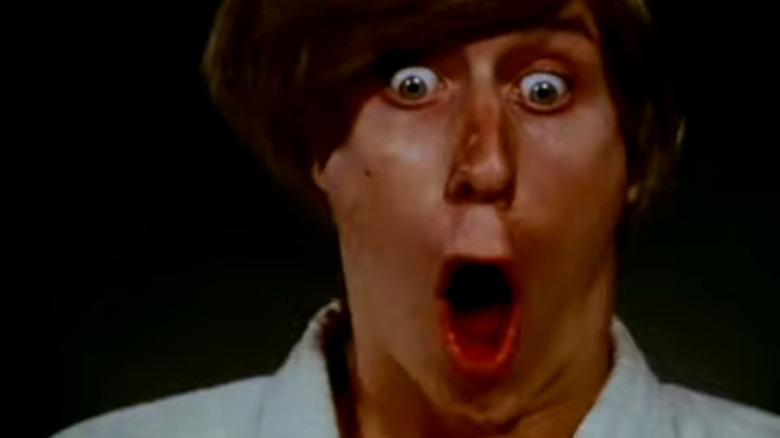
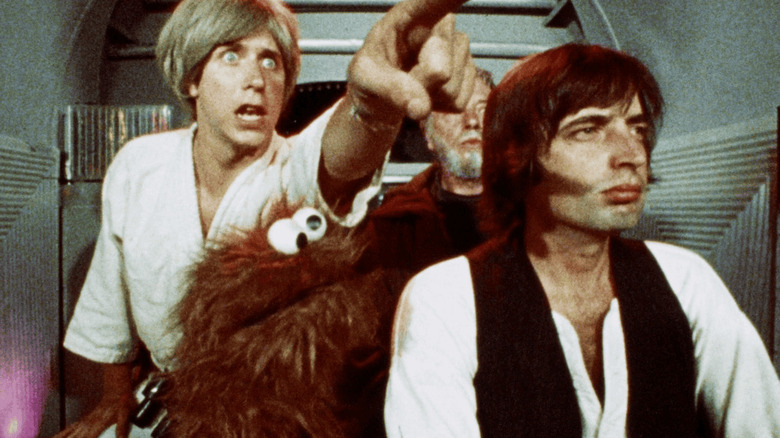
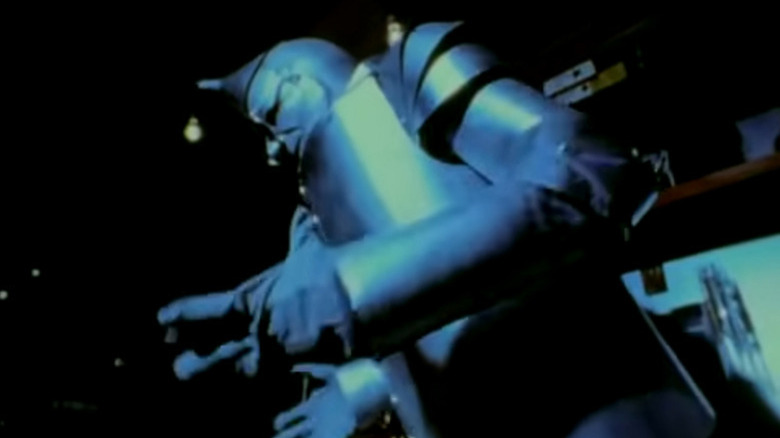
"Hardware Wars" was released only 18 months after "Star Wars" opened in theaters. Fosselius worked quickly, and clearly took a lot of humor cues from MAD Magazine. "Hardware Wars" is a straight-up spoof that gives all the extant "Star Wars" characters more ridiculous names and sillier personalities. "Fluke Starbucker" is played by Scott Matthews, "Ham Salad" by Bob Knickerbocker, and "Princess Anne-Droid" by Cindy Furgatch. The "Star Wars" droids C-3PO and R2-D2 are replaced by 4-Q-2 (who looks like the Tin Woodman from the "Wizard of Oz") and a literal vacuum cleaner named Artie-Deco.
Chewbacca became Chewchilla the Wookiee Monster, and is just a brown version of Cookie Monster from "Sesame Street." (Perhaps Fosselius asked the "Sesame Street" folks to lend him a puppet.) The "Hardware Wars" villain is named Darph Nader. Nader's mask is so thick, no one can make out what he's saying. The immortal Paul Frees, the voice of Disneyland's Haunted Mansion, was the narrator.
The spaceships and props are all made of household items, droids are made from disused refrigerators, and the laser blasts are just scratches on the filmstrips. The lightsabers are flashlights. The music, to match the grandeur of John Williams, is merely a recording of Richard Wagner's "Ride of the Valkyries," employed before Coppola had a chance to make use of it in "Apocalypse Now" in 1979.
And of course, the humor of "Hardware Wars" is the least sophisticated thing imaginable, akin to making fart noises with your armpits. It's just 13 minutes of mugging and giggling. "Hardware Wars" is clearly aimed at the irascible seven-year-old inside all of us, or perhaps the ironic adolescent who loves to see the holy writ of pop culture be gleefully vandalized.
The weird and wild career of Ernie Fosselius
You know what? "Hardware Wars" is actually funny. It's jejune, but there's a puckish sense of enjoyment to the entire endeavor. Also, the film's low-budget and homemade aesthetic gives it a strange sense of authenticity. This is a smart-alecky filmmaker happy to prod the pop culture beast. This is what college kids were doing with cameras before the era of YouTube. "Hardware Wars" is stupid in the best possible way.
According to a profile in Salon, Ernie Fosselius was well-versed in video parodies like "Hardware Wars" before taking a stab at George Lucas' classic. He made a film about a flying hamburger called "The Hindenburger," and would regularly goof on pop movies with buddies. After "Hardware Wars," he kept the party going with a spoof of "Apocalypse Now" called "Porklips Now." In the middle of all that, Fosselius became one of the founding members of the surrealist music collective the Mystic Knights of the Oingo Boingo, the group that would give us Danny Elfman, Richard Elfman, the band Oingo Boingo, and the movie "Forbidden Zone."
Fosselius' work on "Hardware Wars" was likely what got him hired to do sound effects for Mel Brooks' own "Star Wars" parody "Spaceballs" in 1987. He became a sound editor and foley editor for movies like "Serial Mom" and "Ed Wood."
The makers of "Star Wars" were clearly fond of Fosselius, and he has provided voices and vocal effects for multiple Lucasfilm productions. He played the voice of the weeping Rancor keeper in "Return of the Jedi," and some pilots in "Indiana Jones and the Temple of Doom."
All these years later, "Hardware Wars" is still worth a look (provided you have an immature sense of humor).