

Winona Ryder And Daniel Day-Lewis Teamed Up For An Underrated Flop That Deserves A Second Look
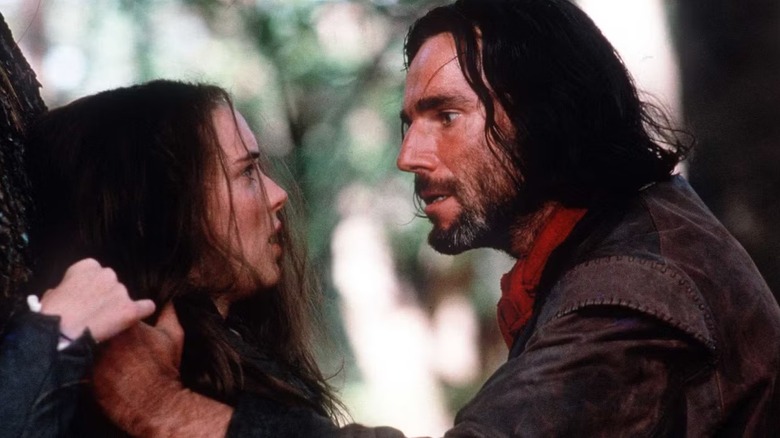
Daniel Day-Lewis and Winona Ryder were absolutely brilliant in Martin Scorsese's direly underrated "The Age of Innocence," but when the film grossed $32 million on a $34 million budget, no studio in Hollywood was hot for a re-teaming of these two gifted actors. It didn't help that their romantic chemistry in Scorsese's movie was intentionally muted; Day-Lewis' Newland Archer felt more like a father figure to Ryder's May Welland than a lover.
Still, they definitely had a great on-screen rapport, which evidently caught the eye of seasoned theatrical director Nicholas Hytner. The future director of London's National Theatre had earned acclaim for bringing the technically audacious "Miss Saigon" to the stage in 1989, and won a Tony Award for Best Director in 1994 on the strength of his brilliant revisionist take on Rodgers and Hammerstein's "Carousel." When Hytner transferred his sensational production of "The Madness of George III" to film (retitled "The Madness of King George"), he was viewed as a prestige-picture savant with theatrical bona fides. This guy could be the next Tony Richardson.
Knowing his strengths as a director, Hytner chose to follow up "The Madness of King George" with the first Hollywood studio production of Arthur Miller's "The Crucible." Widely considered one of the greatest plays of the 20th century, this sounded like an Academy Awards thoroughbred before the casting came in. Day-Lewis and Ryder getting the opportunity to set off sexually charged fireworks was a huge deal, as was the involvement of Joan Allen, Bruce Davison and Academy Award-winning legend Paul Scofield. Released on November 27, 1996, "The Crucible" face-planted at the box office, and eked out two Oscar nominations. It's become a footnote in the career of just about everyone involved, but it deserves much better.
The Crucible is sadly relevant again
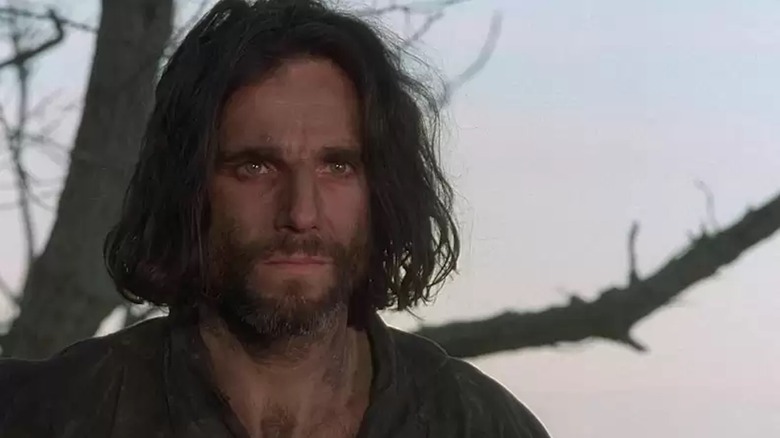
Hytner's biggest challenge with "The Crucible" was relevance. Miller wrote his Salem, Massachusetts-set play as an allegory for the Red Scare of the 1950s led U.S. Senator Joseph McCarthy, a vicious demagogue who sought to destroy the lives of anyone associated with the Communist Party (as seen in George Clooney's black and white pic "Good Night, And Good Luck"). The main character of "The Crucible," John Proctor (played in the film by Day-Lewis), is guilty of having committed adultery by sleeping with the young Abigail Williams (Ryder). Abigail and other young women get wound up and begin accusing their neighbors of witchcraft. When Abigail targets Proctor's wife Elizabeth (Allen) of being a witch, he realizes he must confess his sin to save her.
The hysteria of "The Crucible" would be searingly effective in today's deranged climate, but in 1996, it felt like a museum piece. Our legal system seemed relatively sane. Religious extremism was a fringe concern. "The Simpsons" was in the midst of a banger eighth season.
Recognizing this, Hytner went pure period with "The Crucible," and, if nothing else, directed the hell out of it. It's a taut, visually exciting adaptation of a play that most people have probably seen as a creaky piece of community theater. A lot of critics shrugged at the time (Roger Ebert gave it two stars), but this film is essential viewing in 2026. And aside from the perversion of justice, you'll get to see Scofield in his final live-action performance as the dread-inducing Judge Danforth. He makes a meal out of Miller's dialogue.
I hate that "The Crucible" is relevant again, but I'm so very happy it exists. Please seek it out.