

You're Not A Sci-Fi Fan If You Haven't Seen This Mind-Bending '90s Movie With William Hurt
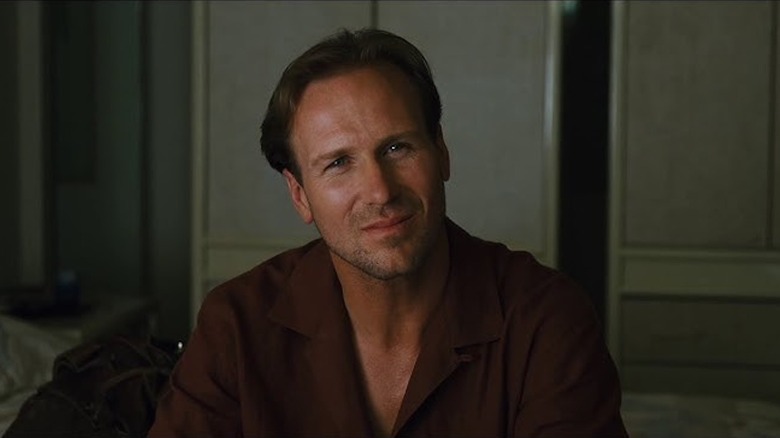
Science fiction movies were in an action groove during the late 1980s. Films like James Cameron's "Aliens," John McTiernan's "Predator," and Paul Verhoeven's "RoboCop" thrilled audiences with smart premises and bullet-whizzing set pieces, which left Hollywood studios clamoring for more of the same. They got precisely what they wanted. But while there were certainly more classics that came out of this era (e.g. Cameron's "Terminator 2: Judgment Day," Verhoeven's "Total Recall" and Marco Brambilla's Taco Bell-heavy "Demolition Man"), sci-fi films sans, per Clarence Boddicker, state-of-the-art bang-bangs were in short supply.
German filmmaker Wim Wenders sought to change this in 1991 with his globetrotting futuristic epic "Until the End of the World." There was considerable excitement for this movie given that the director's previous two films, "Paris, Texas" and "Wings of Desire," ranked among the best of the 1980s. Wenders had a beguiling sense of the fantastic and bizarre. At his best, Wenders' movies are profoundly humanistic and hauntingly otherworldly (particularly in the case of "Wings of Desire"). They're also deeply meditative, which means they don't exactly unfold at a breakneck pace. For filmgoers incapable of engaging with unconventionally told stories, Wenders' cinema is probably a no-go.
Nevertheless, Wenders prior successes allowed him to cobble together a $23 million budget for his film about a varied cast of characters (including William Hurt as a noir-coded fugitive) caught up in a web of intrigue as an Indian nuclear satellite threatens to crash somewhere on Earth. The disaster movie element of "Until the End of the World" might make it sound marketable, but Wenders is much more interested in emerging technology that promises to enrich people's lives yet only makes them more miserable. This did not help its box office prospects.
Until the End of the World is a sci-fi masterpiece
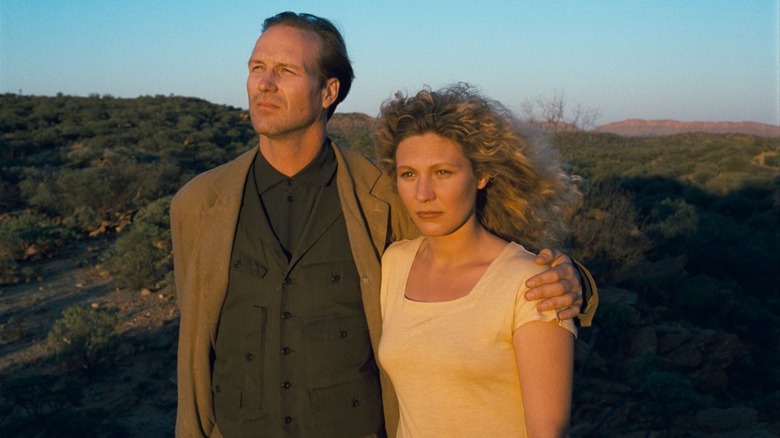
Wim Wenders first conceived of "Until the End of the World" in 1977 and developed its screenplay for over a decade. He was always in some form of pre-production on the movie, even though he wasn't sure he'd ever get the funding necessary to realize his peculiar vision. It became a labor of love, and when someone as talented as Wenders gets space to dream, you're bound to wind up with something massively complex.
Initially, "Until the End of the World" was simply a lot of movie, reportedly 20 hours' worth. Wenders was contractually obligated to deliver a feature-length film, so he trimmed it down to 158 minutes for its U.S. release and 179 minutes for its European rollout. He wasn't pleased with either cut, and, when I saw the U.S. edit in theaters, I wasn't a fan either. There was so much to the story (bank robbers, bounty hunters, a dream recording device), yet no time to connect with its myriad characters. You could sense that the movie had been gutted.
My opinion shifted drastically when I saw the restored 287-minute director's cut. Not only was I moved by its rumination on the intellectual/emotional dead end of nostalgia, I was wholly entertained throughout. The pacing of this version is perfect, and its depiction of humans' relationship with technology a decade or so down the road is eerily accurate. (Wenders also saw the surveillance state coming in 1997's "The End of Violence.") That's not to mention the superb performances from William Hurt, Solveig Dommartin, Sam Neil, Max von Sydow, and Jeanne Moreau.
The "Until the End of the World" director's cut is currently streaming on The Criterion Channel. Treat yourself to one of the most underrated sci-fi movies ever made.