

The Forgotten 1991 Gangster Film Flop That Starred Nicole Kidman And Bruce Willis
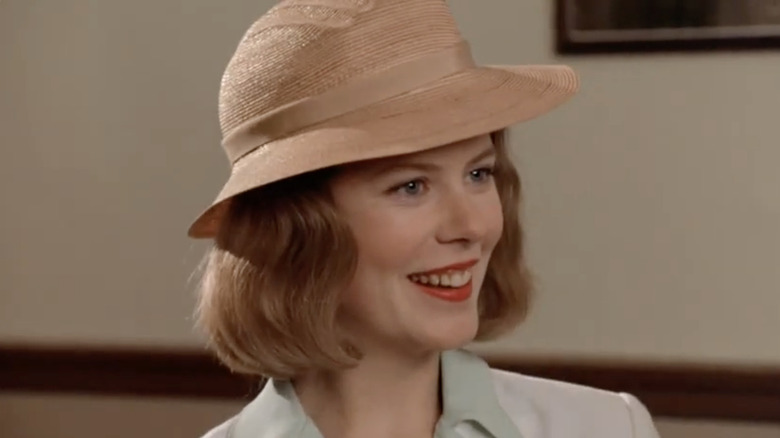
Some movies come together so fast and so fortuitously that their critical and commercial success feels like a fait accompli. Such was the case with 1991's "Billy Bathgate." The film had timing and pedigree on its side. Based on the acclaimed novel by E.L. Doctorow, the project repped an Oscar-friendly "Kramer vs. Kramer" reunion of director Robert Benton and star Dustin Hoffman and boasted the added star power of Bruce Willis and on-the-rise leading lady Nicole Kidman. The marvelous playwright Tom Stoppard ("Rosencrantz and Guildenstern Are Dead," "Arcadia") wrote the adapted script. Néstor Almendros ("Claire's Knee," "Days of Heaven"), arguably the greatest cinematographer on the planet at the time, was behind the camera. And, perhaps most importantly, it was a lavishly produced gangster movie arriving in the midst of a genre renaissance kicked off by "Goodfellas," "Miller's Crossing," and "The Godfather Part III."
If you weren't around when the movie was released, you might be wondering how a film with this much going for it is never referenced, much less discussed, 34 years after its premiere. I was there at the time, and I'm still baffled that this seemingly can't-miss project missed as badly as it did. Released by Touchstone Pictures on November 1, 1991 (after being delayed nearly half a year due to reshoots and reedits), Benton's bungled gangster epic grossed $15.6 million at the box office against a $48 million budget. This was quite the embarrassment for Disney's then motion picture honcho Jeffrey Katzenberg. 11 months earlier, he'd written a memo that took his studio, and the film industry in general, to task for overspending. "Billy Bathgate" was precisely the kind of production he'd inveighed against.
Still, it was hard to ding Katzenberg for greenlighting "Billy Bathgate." On paper, it looked like a winner. What went wrong?
Billy Bathgate was doomed to fail from the start
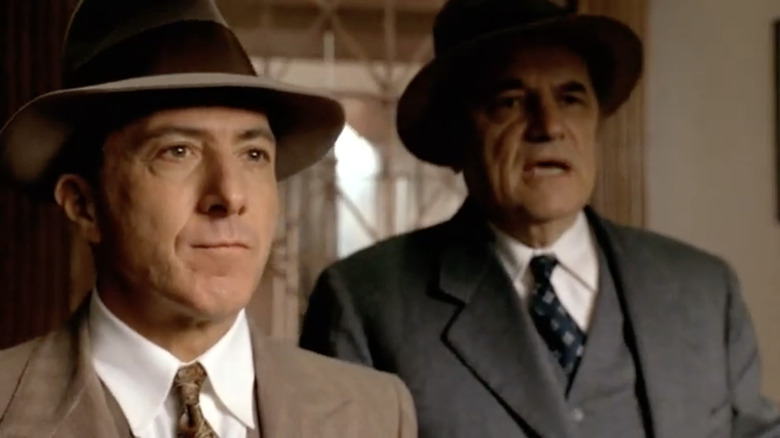
Published in 1989, Doctorow's "Billy Bathgate" tells the Huckleberry Finn-esque tale of the titular Bronx-bound 15-year-old's adventures in 1930s gangsterland. After inveigling himself into the organized crime outfit run by Dutch Schultz, he's primarily tutored by mob accountant Otto Berman, who does his best to keep the hot-headed Schultz from making rash decisions. Along the way, Billy bears witness to murder, falls for Schultz's moll Drew Preston, and narrowly escapes his own execution. It's an unusually sentimental work for Doctorow (best known for the brilliant historical fiction "Ragtime"), but it's this quality that caught Hollywood's attention. This could be "Goodfellas" with a happy ending.
It's extraordinarily rare that this can be said, but the trouble started with Stoppard's screenplay. To be fair, it wasn't an easy assignment. Although the narrative itself is straightforward, it sings in the novel thanks to Doctorow's melodic prose; when you remove that element, you lose a significant piece of what makes the story so special. I also question Stoppard's decision to streamline the plot. His third script draft (which is dated June 15, 1990) is a brisk read, but Billy (as played by Loren Dean) is overshadowed by Dutch, Otto, Drew, and the gang's charismatic lieutenant Bo Weinberg. They get all the great dialogue, while Billy is relegated to being an observer. Granted, that's how it works in the book, but we're privy to Billy's thoughts and how he comes of age there.
Billy was never going to be a dynamic or even an interesting character on screen, but with the enormously talented Hoffman playing Schultz, maybe that wouldn't be a problem. And while his performance is far from an issue, his behind-the-scenes behavior was. Meanwhile, Benton proved to be a terrible fit for this material.
Even Bruce Willis couldn't save Billy Bathgate
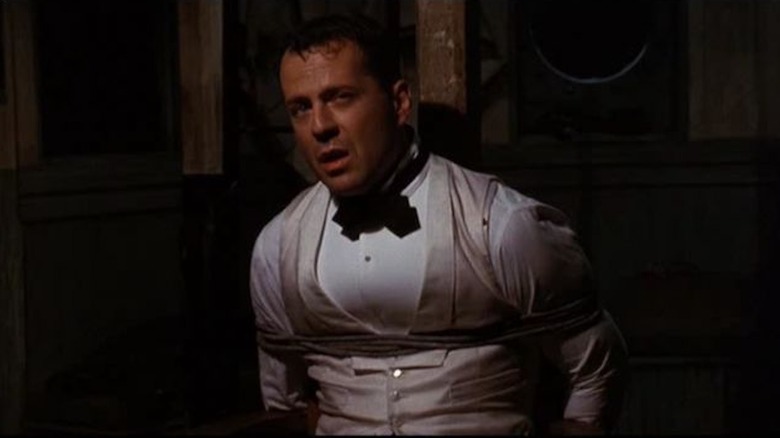
"Billy Bathgate" is a handsomely-mounted gangster film that, at the time, gave us rare insight into the lives of Jewish mobsters. Hoffman, who was excited to play Dutch, lobbied Benton for the opportunity to essentially direct Dean like he'd done with a very young Justin Henry on "Kramer vs. Kramer." Hoffman wound up being full of ideas, but, as had happened with Sydney Pollack on "Tootsie," he found himself in conflict with Benton. In this case, however, the star gave himself over to his director and, in a way, disowned the movie. As he told the Los Angeles Times in 1991, "At the end, Benton put his arm around me and said, 'This is the best experience I've ever had.' I just said, 'It's your picture. We're not partners.' I was just there to serve."
When the film entered post-production, it became alarmingly evident that Benton had whiffed. After Katzenberg saw the film's second cut, he considered firing Benton (who, I'm told, offered to leave the picture). It's a flat movie that was never going to work, but they reshot its ending anyway. Stoppard's third draft closes with Billy juggling outside Dutch's hospital window as the gangster dies, while the film ends with Billy getting a stay of execution from the gangster Lucky Luciano (Stanley Tucci). Why they abandoned the book's conclusion, which has Billy fighting in WWII before returning home to dig up a huge chunk of Dutch's fortune, I'll never know.
Ultimately, Willis' presence was the film's major selling point. He was one of Hollywood's biggest stars at that moment, but he's barely in the movie. At every level, "Billy Bathgate" is an exercise in self-sabotage. It's gorgeous to look at and, strangely, not boring, but lifeless in the end.