

Roger Ebert Believed One Of The Best Horror Movies Was 'Without Any Apparent Purpose'
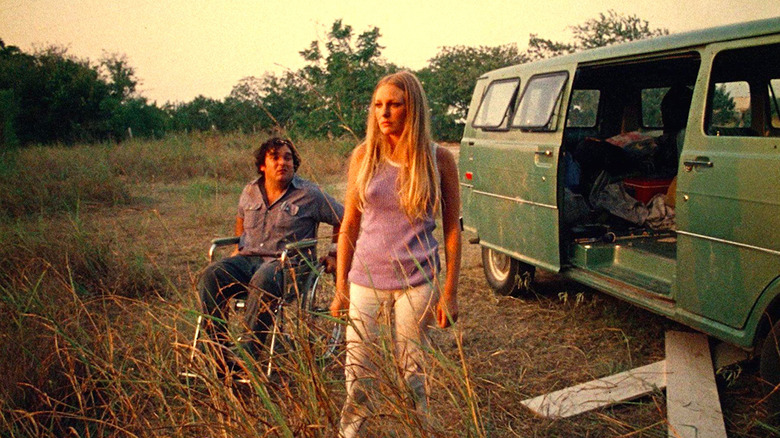
"The Texas Chainsaw Massacre" franchise hasn't always hit home runs, but Tobe Hooper's original 1974 cannibalistic nightmare is widely regarded as one of the best horror films of all time. For many fans, "The Texas Chain Saw Massacre" is a gritty, realistic, unrelenting exercise in pure terror — and that's what it makes it awesome. However, naysayers like influential critic Roger Ebert argue that Hooper's sweat-drenched slaughterfest lacks any real vision or merit in terms of storytelling. As Ebert wrote in his review:
"The Texas Chain Saw Massacre" is as violent and gruesome and blood-soaked as the title promises — a real Grand Guignol of a movie. It's also without any apparent purpose, unless the creation of disgust and fright is a purpose."
To be fair to Ebert, movies about cannibals tormenting teenagers aren't for everyone. "The Texas Chain Saw Massacre" also takes the "less is more" approach by not sharing a lot of information about the now-iconic Leatherface (Gunnar Hansen) and his flesh-hungry family members. Some viewers will argue the ambiguity makes for a more terrifying experience, but Ebert felt the film could have benefitted from a deeper exploration of the cannibals' personalities.
Despite not being a fan of the film, Ebert didn't completely dismiss its effectiveness. With that in mind, let's explore the good things the legendary film critic had to say about the movie, despite harboring some feelings of disgust toward it.
Roger Ebert praised The Texas Chain Saw Massacre's technical accomplishments
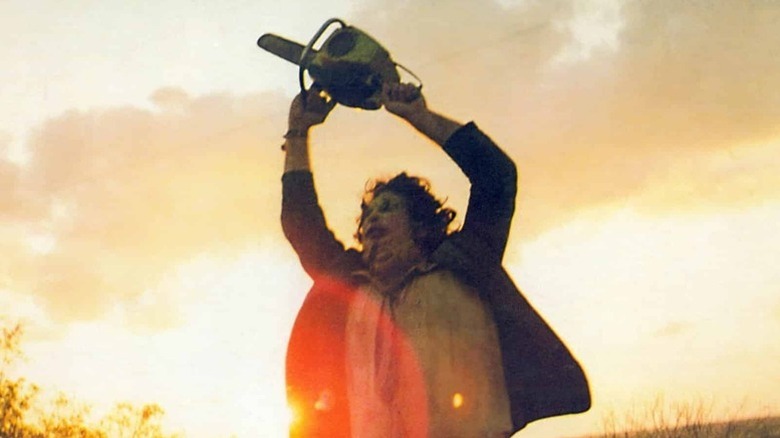
Roger Ebert wasn't the biggest fan of violent horror movies (he especially disliked many slasher flicks you probably love). Be that as it may, he reviewed movies within the context of their intentions, highlighting elements that appealed to their desired audience. Regarding "The Texas Chain Saw Massacre," he acknowledged its effectiveness as an unpleasant piece of cinema — one that showcased Tobe Hooper's evident talent as a filmmaker. As Ebert put it:
"Horror and exploitation films almost always turn a profit if they're brought in at the right price. So they provide a good starting place for ambitious would-be filmmakers who can't get more conventional projects off the ground. 'The Texas Chain Saw Massacre' belongs in a select company (with 'Night of the Living Dead' and 'Last House on the Left') of films that are really a lot better than the genre requires. Not, however, that you'd necessarily enjoy seeing it."
Despite the faint praise, Ebert's statement implies films like "The Texas Chain Saw Massacre" don't have to be ambitious. You know, because they lack artistic merit (or purpose, as Ebert put it). That said, every horror film he cited in the aforementioned passage is more than mindless exploitation. Hooper's classic, in particular, has been cited by scholars as a deeply political, pro-animal rights movie that effectively addresses the American mood following the Vietnam War. Everyone is entitled to their own opinion, but "TCM's" status as a classic proves that it's the real deal.