

Why Universal Execs Were Convinced Fast Times At Ridgemont High Was Going To Bomb
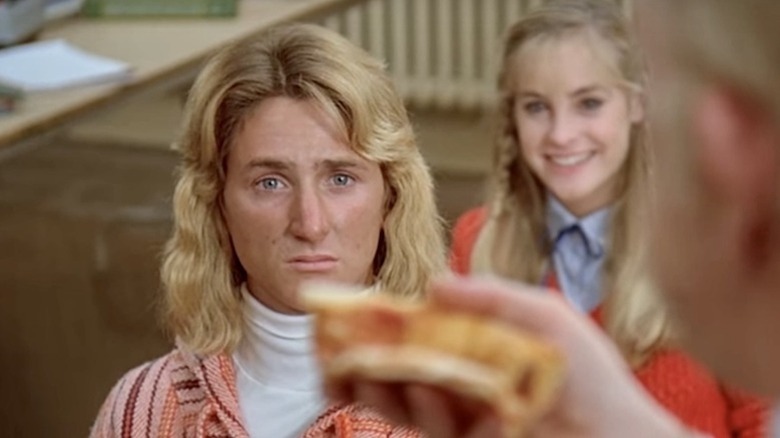
Amy Heckerling's "Fast Times at Ridgemont High" is widely acknowledged as one of the greatest teen comedies ever made, but when Universal Studios released it in theaters 43 years ago, the company was convinced they'd made a $5 million mistake. Based on Cameron Crowe's nonfiction account of his time spent undercover as a high school student at Clairemont High School in Southern California, the film was unique for its frank, contemporary depiction of teen sex and drug use. But the studio was worried that it lacked the nostalgic appeal of "American Graffiti" or "Porky's," which might've drawn the interest of Baby Boomers. This was a straight play to Generation X, which wasn't fully understood as a cohort at this point.
In hindsight, we know Universal's concerns were misplaced. Two years later, the studio would be enthusiastically flooding U.S. multiplexes with John Hughes' "Sixteen Candles," which led to the era-defining classic "The Breakfast Club." But Hollywood was entering a new, risk-averse phase, where executives valued tried-and-true formulas over untested concepts, and, as Crowe told The Hollywood Reporter decades later in a retrospective interview, "Fast Times at Ridgemont High" was an unknown quantity. They'd come to know just how wrong they were.
Jennifer Jason Leigh was the MVP of Fast Times at Ridgemont High
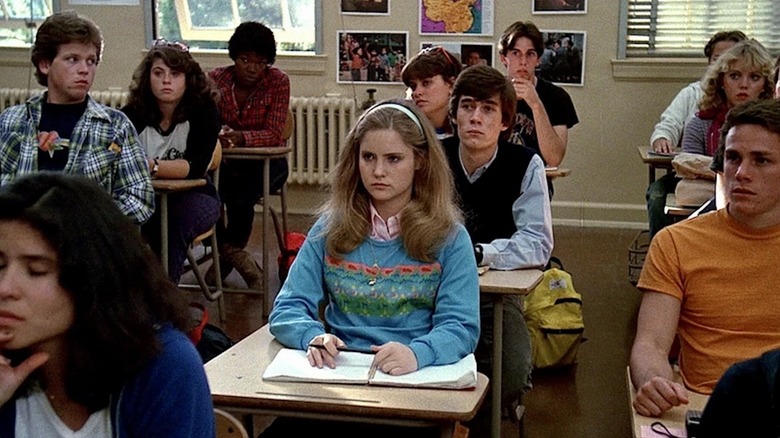
According to Crowe, "The thinking was that if you have something that adults would appreciate, too, then you have a double bite at the apple." Heckerling and Crowe ignored Universal's pleas to broaden the film's demographic appeal, which led to the studio essentially giving up on the movie. Per Crowe, "They said, 'Let's go to the funeral' on the way to the last preview."
The genius of "Fast Times at Ridgemont High" is that there are no parents in the movie. The adults are teachers or bosses. This is how high school works for a lot of kids. Your parents are a part of your life, but you're actively trying to shut them out because your hormones are raging and you don't want them to know about your nascent sex life. This hits particularly hard via the film's portrayal of Stacy Hamilton (a god-level performance from Jennifer Jason Leigh), a 15-year-old girl who, as she suddenly blossoms, is getting all of her guidance from her sexually advanced 18-year-old best friend Linda Barrett (Phoebe Cates).
Stacy loses her virginity to a noticeably older man early in the film, a scene that Crowe said was one of Universal's biggest objections. "The lack of a romantic vision of first-time sex," said the screenwriter. "It was a lot more real, and it was a little bit hard to watch. She is in a [baseball park] dugout, and what is she looking at while she's losing her virginity? Somebody's graffiti that says 'Surf Nazis must die.' That was on the level of emotional candor that I don't think people were ready for, until young people saw it and said, 'I get that.'"
Fast Times at Ridgemont High ushered in a new era of teen comedies
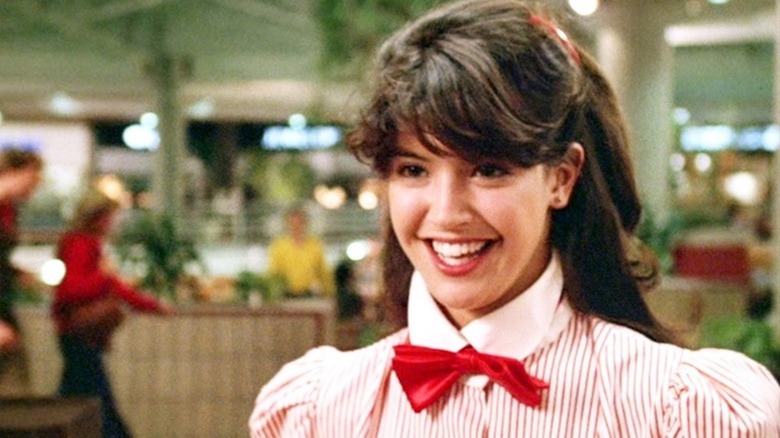
Universal dumped "Fast Times at Ridgemont High" in 498 theaters over the August 13, 1982 weekend. It entered the marketplace with direct demographic competition from the 3D enhanced slasher sequel, "Friday the 13th: Part III." Jason Voorhees dominated this first frame, but in the weeks to come, Heckerling's film would prove to be a leggy sleeper hit. Despite an absence of stars (Sean Penn was a nobody at this point), word of mouth spread amongst teens that this was a movie that got them. By the end of its domestic run, "Fast Times at Ridgemont High" had grossed $27 million domestically against a $5 million budget.
Though some major critics failed to understand the appeal of Heckerling's film (most notably Roger Ebert, who panned it with a one-star review), Gen X-ers were blown away by its authenticity. Everyone knew people like Stacy, Linda, Jeff Spicoli, Mark Ratner (Brian Backer), and so on. They had weirdo teachers like Mr. Hand (Ray Walston) and Mr. Vargas (Vincent Schiavelli). They were all adrift on the sea of young adulthood, experimenting with drugs and alcohol, eager for and dreading sex, and wondering what in the hell they were going to do with the rest of their lives. "Fast Times at Ridgemont High" takes the easy way out with a silly epilogue (which, like "National Lampoon's Animal House," goofs on the hard-hitting closing titles of "American Graffiti"), but the majority of the film rings true.
As always, studios have awful instincts when it comes to making original movies. Had Heckerling and Crowe not fought for their vision, the cinema landscape might look very different today.