

The Only Major Actors Still Alive From The Towering Inferno
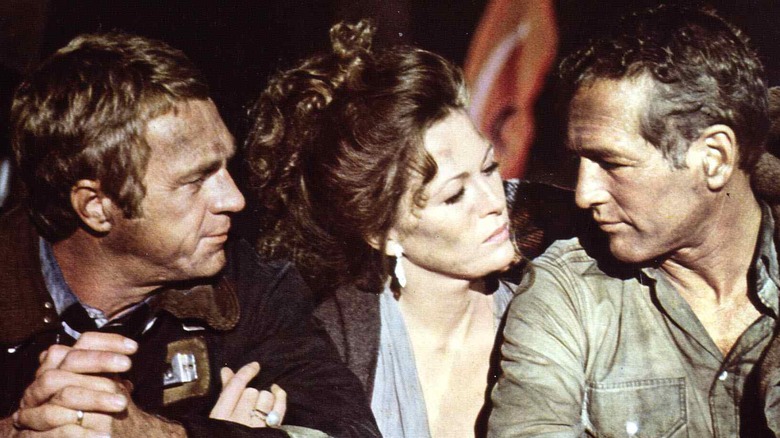
Cinephiles romanticize the New Hollywood era of the late 1960s and most of the 1970s as a time of artistic rebellion during which a batch of young directors and experienced helmers saved Hollywood by connecting with Baby Boomer moviegoers bored with formula Westerns, backlot musicals, and all the other fusty stuff their parents dragged them to throughout their childhood. These artists toyed with genre conventions and film technique to reignite a jaded generation's excitement for the medium at a time when television was becoming an increasingly appealing entertainment option.
It was an incredibly exciting time for movies, but audiences of all ages still had an appetite for good ol' cinematic spectacle. They might've tired of sword-and-sandal epics and widescreen adaptations of Rodgers and Hammerstein musicals, but there was nothing wrong with studios spending loads of money to fill the big screen with eye-popping imagery.
And for most of the 1970s, there wasn't a better mega-budget bet than a star-studded disaster flick.
These movies were cornball entertainments, but they dazzled audiences with their scale, stunts and, in some cases, newfangled special effects. They also played smashingly with Academy Awards voters, who lavished the first major disaster hit, "Airport," with 10 Oscar nominations (including Best Picture).
None of these films has aged particularly well, but Irwin Allen, nicknamed the "Master of Disaster," embraced the essential silliness of the genre, and was shockingly adept at getting the era's biggest stars to come along for the calamitous ride. "The Poseidon Adventure" was his best movie, but "The Towering Inferno," in which a 138-floor skyscraper catches fire, was by far his biggest hit, primarily due to his powerhouse co-leads Paul Newman and Steve McQueen.
"The Towering Inferno" is over 50 years old, and while most of its cast has moved on to the highest high-rise of them all, some of the main cast is still around to celebrate the film's anniversary. So let's show them some love while they're still with us.
Faye Dunaway
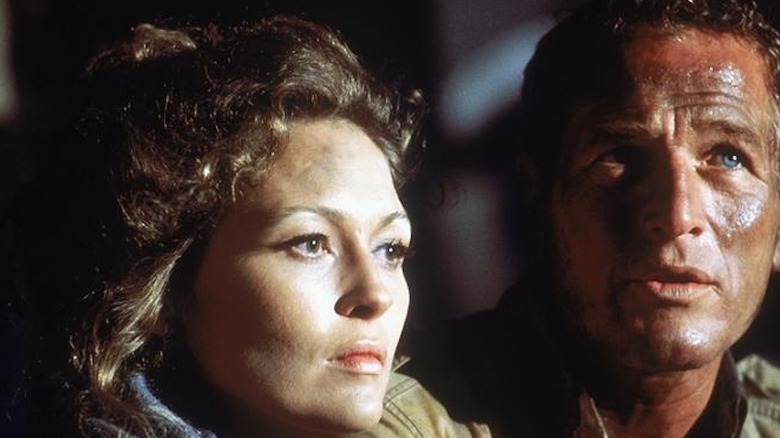
Allen and 20th Century Fox weren't messing around when they cast "The Towering Inferno." Not only did they get Newman and McQueen, they landed one of the most sought after female leads of the '70s in Faye Dunaway. Arthur Penn's pivotal New Hollywood masterpiece, "Bonnie and Clyde," made Dunaway an instant superstar in 1967, and she was enjoying what wound up being the best year of her career in 1974 with the trio of "The Four Musketeers," "The Towering Inferno," and "Chinatown" (for which she earned her second Best Actress nomination).
Dunaway doesn't have much to do as Newman's fiancèe, but her mere presence lends the movie a greater degree of prestige than it deserves. She would finally win the Best Actress Oscar two years later (for "Network", from which she was nearly fired), but possibly damaged her career in 1981 with her over-the-top portrayal of a child-abusing Joan Crawford in "Mommie Dearest." Dunaway ultimately regretted the performance (which is unfortunate because she's singularly spectacular in the film), and the projects that followed were certainly not to the level of her '70s works. I think she's brilliant in "Barfly," "The Temp" and "The Yards," but despite an Emmy-winning guest appearance on a 1993 "Columbo" special, she struggled to find parts worthy of her phenomenal talent. A documentary on her life premiered at the Cannes Film Festival to enthusiastic reviews, and we'll get to see the 84-year-old legend strut her sui generis stuff alongside Harvey Keitel and Mena Suvari in the supernatural love story "Fate."
Susan Blakely
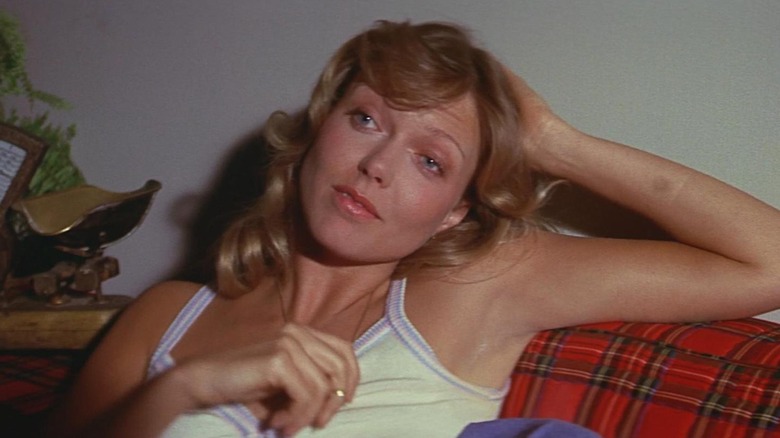
Blakely was already a rising star when she snagged the role of William Holden's conscience-stricken daughter in "The Towering Inferno," but she found her greatest success on television when she won a Primetime Emmy Award for her portrayal of Julie Prescott, the love of Rudy Jordache's life in the hugely successful 1976 ABC miniseries "Rich Man, Poor Man." She received a second Emmy nod when she reprised the role for one episode on the less acclaimed "Rich Man, Poor Man Book II," and wound up being an incredibly prolific television actor for the rest of her career.
While Blakely never wanted for small-screen work, she specialized in television movies. I've no idea why she never found a home as a long-running series regular, and, looking over her oeuvre, it doesn't appear that she really ever really tried. She did turn up in the occasional movie ("Over the Top" fans no doubt remember her as Sylvester Stallone's dying wife), and, most recently, had a recurring role on NBC's "This Is Us." The 75-year-old actor hasn't appeared in anything since 2018, so it's possible she's enjoying a well-earned retirement. Regardless, she'll always be our Julie Prescott.
Robert Wagner
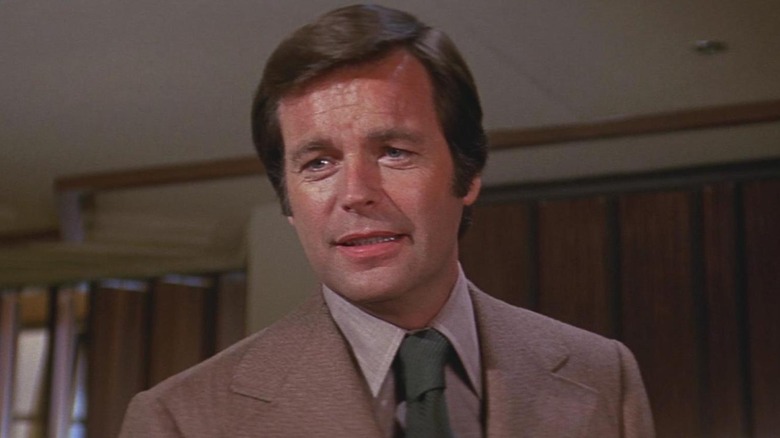
Hollywood studios had high hopes for Robert Wagner early in the star's career, but he never really caught fire. This is likely because, despite his preposterous handsomeness, he always came off a little stiff.
He was pure perfection, however, as the smug publicist who starts the titular conflagration in "The Towering Inferno." He's one of the film's first big names to get immolated, and we're not sad to see him go up in flames. It's his second most satisfying big-screen death behind his climactic offing as the sleazebag gold-digger protagonist of the classic 1950s film noir "A Kiss Before Dying."
Wagner turned 95 this year, and hasn't acted since 2017, so it seems the man who is best known to Millennials as Number 2 in the Austin Powers series has called it quits. This means his legacy will almost certainly be defined by his tempestuous marriage to Natalie Wood, which came to a tragic end when Wood was found drowned a mile away from the yacht on which both had on board (along with Wood's "Brainstorm" co-star Christopher Walken). This is not the place for speculation, but he was named as a person of interest in 2018 when the case was reopened (and it's worth noting that Wood's body was covered with fresh bruises). The case is still open, and seems unlikely to ever be solved.
Susan Flannery
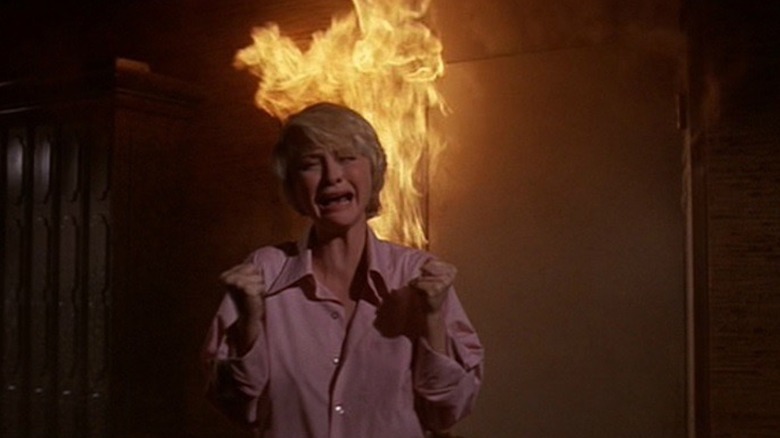
Susan Flannery had been acting regularly on television for more than a decade (including multiple seasons on the soap opera "Days of Our Lives") and appeared in two movies when the Golden Globes inexplicably named her its New Star of the Year for 1974 (the award was discontinued after reporters charged actor Pia Zadora's husband with having bought her the trophy in 1981 for her reviled performance in "Butterfly"). But she is quite effective as Robert Wagner's paramour, so why begrudge her this triumph?
Flannery was set up for, at the very least, a busy career as a character actor, but, according to gay rights activist Rita Mae Brown, she was denied juicier roles post "The Towering Inferno" because her homosexuality was an open secret. Though she managed a well-deserved comeback on the soap opera "The Bold and the Beautiful" in 1987, if you're not a fan of the sudsers all you have to go on are her appearances in "The Towering Inferno" and "The Gumball Rally." All I know is that Flannery blows many of her co-stars off the screen in the former, and that I wish she'd been allowed to have the career she deserved. She is now 86, and segued to directing soaps in the late 2000s.