Editor’s Note: After Turner Classic Movies released their list of the 15 Most Influential Classic Movies, some people were complaining that no films were included from the last 32 years. I joked on Twitter that I would like to see a list of the ten most influential films of the last ten years, and Brendon jumped at the opportunity to create such a list. The idea is to predict what ten films from this decade would be looked at as influential in 20 years. The task is ridiculous, because its hard to predict the long term effects of the films that were released in the last decade (especially ones released in the last couple years), but Brendon did a pretty good job. It should be noted that Brendon’s list is more skewed towards advances in filmmaking and storytelling which influenced and changed the future of cinema, rather than movies that influenced the culture.

influential

Are these the ten most influential films of the last ten years? I think they might just be. Disappointingly, I really don’t like four of them. I’ve also cheated and only included English language films.

The full list will come after the break, and then after that will come the comments section for your contributions.

Here’s the list in no particular order. I’ll follow up with my ideas on why these films might turn out to be so darned influential.

Sky Captain and the World of Tomorrow

Sky Captain is on the list for kick-starting green-screen mania. Sin City advanced the technique significantly, and 300 sprinkled a few extra tricks on top, but it was Sky Captain that generated the first wave of headlines and got moviemaking minds to thinking. It may have even indirectly inspired Dogville and Manderlay (I have my suspicions) but that sub-set, no matter how incredible those films are, has probably already come to an end.

The Bourne Ultimatum

The Bourne Ultimatum is on the list for exemplifying and honing two different things: the ‘running man camera’ action scenes, which is now the norm; and the rapid-fire cross cutting between an alarming amount of different angles. Paul Greengrass and Christopher Rouse go down in history for finding a way to assemble a record-breaking variety of coverage in a way that is comprehensible to the audience. I would explain how it works, but it’s mighty geeky and a little bit technical.

Traffic

Traffic is on the list for popularizing a narrative paradigm I think we’ll be seeing a lot of, and which we wouldn’t have seen at all otherwise.  That doesn’t take too much explaining.

My Big Fat Greek Wedding

My Big Fat Greek Wedding is on the list for its release strategy and resulting success. Apparently never taking more than $15 million in a single weekend, it was a plate kept spinning long enough to take over $240 in total US box office receipts. The pseudo-indie wings of studios would probably never have taken flight without this particular puff of wind.

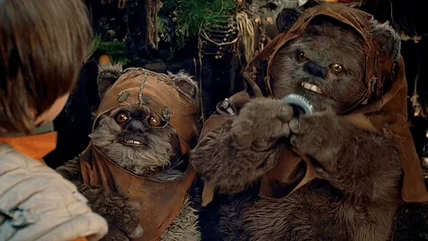
Polar Express

Polar Express is on the list because motion capture is now here, and is not going anywhere. And I’m personally very glad of that because it’s a fascinating toolkit and opens up any number of possibilities for directors.

Rushmore

Rushmore is on the list for stamping Wes Anderson’s style, in its most successful form, onto the broad pop culture. I see its influence everywhere – indeed, even Wes Anderson himself has turned out a few examples of Rushmore pastiche. Irrelevantly, it was also the last Wes Anderson film I liked. In fact, I loved it. And before you bite my hand off because you have Rushmore pegged as a ’98 release, let me remind you that I’m in England and we didn’t get it until late ’99.

The Matrix

The Matrix is on the list for badly repackaging the good ideas and techniques of better films and filmmakers (that means you, Gondry and Fassbinder and Cronenberg and… and… and…) and rendering them cliché. Every hack and his dog has ripped off some element of The Matrix in the last ten years  - indeed, even the Wachowskis themselves have turned out a couple of wonky Matrix derivatives. By the way, if you think there was a single original idea in The Matrix, you’ve been had.

Children of Men

Children of Men is on the list for taking several elements, be they separate shots or FX pieces, and sewing them together into long, seemingly unbroken ‘takes’. It was done plenty of times before (you might argue it goes back to Rope) and I think Blade 2 was the single most inspiring leap forward for this particularly film vocabulary but Children of Men seems to be the one to have inspired everybody, judging from interviews.

The 40 Year Old Virgin

The 40 Year Old Virgin is on the list for being the acorn from which the grand Apatow oak has grown. Comedy has changed, for the better, and this film was absolutely instrumental in the transformation. At the time, I thought it was splendid, and an uncommonly smart, well conceived and executed “boy’s comedy”. I was then pleased to see the genre shift in that direction generally, off the back of Virgin’s surprise success. I may be wrong and Funny People might really be the one that deserves this place on the list, for combining complex drama, rich characterisation, solid craftsmanship and big belly laughs in an even more powerful, audacious way – I guess we’ll find out in a few months.

Coraline

Coraline is on the list for the contributions it makes to the language of 3D film. The most exciting thing about stereo cinema, I’d say, is not that extra dimension creates a “more real” reality but that it gives even more ways to control this reality to the filmmakers. By manipulating the elements of 3D, Henry Sellick, Pete Kozachik and the Coraline camera team have pushed the language of cinema forward bravely, into largely uncharted territory. Seeing as 3D is here to stay this time - no, really - the contributions in Coraline are going to have immeasurable influence over the next few decades of filmmaking.

There all manner of other films that have pioneered small advances – for example,the anamorphic zoom lenses put to task on He’s Just Not That Into You were a genuine benchmark in camera technology and, like Coraline, that film hit screens in just the last few months. I didn’t dare include it because I thought I’d get lynched for a dropping light, fluffy rom-com into the list.

I was also tempted to include Soderbergh’s Che double bill, for proving that the Red One is capable of incredibly high digital image quality at a low price and with low fuss – but no one film in particular really seems to have started that ball rolling so Knowing, for example, could have been cited as equally important.

The Blair Witch Project is not on the list because I think we’re approaching the end of its period of influence and I wouldn’t say the same for any of the ten I picked.

  • Sky Captain and the World of Tomorrow
  • The Bourne Ultimatum
  • Traffic
  • My Big Fat Greek Wedding
  • Polar Express
  • Rushmore
  • The Matrix
  • Children of Men
  • The 40 Year Old Virgin
  • Coraline

That’s my ten, then, and I think I’m sticking with them.

Ten years wrapped up and then finally, I suppose, comes a question: Which of these films would have been kicked off to make room for Avatar had it already hit the silver screen?

  • In my list, I would include:

    1. Old School,

    only that it's a precursor to 40 Year Old Virgin, it was the start of the Frat Pack which is slowly dissapearing for some odd reason (Owen Wilson's been on a down low, Vince Vaughn doing christmas movies)

    2. a comic book movie of some sort.

    Blade, X-men or Spider-Man. I would love to include Nolan's Batman movies or Jon Fav's Iron Man but they help refined the genre, whereas a movie like Blade helped to kick it all off. But...

    3. But...May I include Batman Begins, because it started the reboot thread, for better or for worst. It's not Nolan's fault but more like studios/producers copying an idea and misusing it.
  • In my list, I would include:

    1. Old School,

    only that it's a precursor to 40 Year Old Virgin, it was the start of the Frat Pack which is slowly dissapearing for some odd reason (Owen Wilson's been on a down low, Vince Vaughn doing christmas movies)

    2. a comic book movie of some sort.

    Blade, X-men or Spider-Man. I would love to include Nolan's Batman movies or Jon Fav's Iron Man but they help refined the genre, whereas a movie like Blade helped to kick it all off. But...

    3. But...May I include Batman Begins, because it started the reboot tread, for better or for worst (Bond, Star Trek, Friday the 13th). It's not Nolan's fault but more like studios/producers copying an idea and misusing it.
  • AFaurote
    RED One has hassles. Let's not pretend it doesn't. Especially if you want to work in anything but FCP, but even then it is hardly perfect.

    I'm curious for the details on BOURNE.

    Good list.
  • Editors r us
    It
    Red one works great if you have the perfect post set up to crunch those numbers and grunt for rendering. Don't try it on your g5 that's for sure. As for the details on Bourne I don't think (I would explain how it works, but it’s mighty geeky and a little bit technical.) knows anything. He wouldn't know how to use a crappy movie maker application let alone Avid media composer or what to do with a sata drive. The guy who is the father of fast cutting is Peter Hunt who edited all the earlier Bond films. Watch the action in those movies and you'll see where Bourne editors and every other editor got their inspiration.
  • It's not that the editing is fast. Stay tuned for elaboration on this in a coming piece.
  • DMcG
    Um... Lord of the Rings, anyone?
  • Im glad someone said it.
  • snake
    I think Spiderman has to be on there, just for creating the profit model for the whole superhero film craze. I know that there were some films in the superhero vein before it (X-Men), but Spiderman really changed things with the variety of viewers it attracted.
  • Ben
    Yeah, Spider-man really brought on this whole super hero craze. If I remember right X-Men was before Spider-man, but not as influential I think.
  • hghghhg
    spiderman= shit
  • Im not gonna say I dont agree with the majority of the list. Because in reality I do think they are all very significant and well picked films. The problem is as Peter said, I don't four of them. However, Sky Captain? That is the only one I can see myself not remembering in 10 years. I think movies were drifting technologically that way anyway, it just so happened that this mediocre film was released first.
  • it's kinda like how I thought A.I. was going to be influencial and ten years later, nobody talks about it. Why? Because it's a pretty but empty movie, just like Sky Captain.
  • But Sky Captain influenced Sin City, 300, and The Spirit and probably others I'm missing. Not saying I agree with the choice, but it has had influence. The question is is that influence over?
  • To correct you both Peter and Brandon, Immortel Ad Vitam was the first one of these "green-screen live action" movies
    that came out almost 2 years before Sky Captain
  • sometimes i forget that the movies that can be influential could be movies that I may not like.
  • I agree, I totally forgot about what the movie was about
  • Mark Palermo
    Spy Kids 3-D was out a year before Sky Captain, and made way more money. It seems likely that the genesis of Robert Rodriguez making Sin City was that movie, not a Sky Captain influence.
  • Sky Captain, really? I don't know there, Mr. Connelly. Sky Captain didn't inspire much more than your average bowel movement might.

    And I wouldn't have put Coraline on this list. As much as I hope it will influence other filmmakers to do interesting things with stop-mo and 3D (3D as depth, not gimmick). On top of that, Coraline wasn't Selick's first foray into this world -- he did it 16 years ago with Nightmare Before Christmas. Unfortunately you are limited by the rules of your own article, but that doesn't mean Coraline just jumps in to replace it.

    Those are the two instant disagreements I have with the list you've put together.. I may be back for more later. ;)
  • I kinda agree on Coraline. It's hard to tell. Is it going to have much of impact as..let's say A Nighmare before Christmas? I don't know.
  • Wow, you didn't even read what Brendon had to say about Coraline, did you?
  • Myself
    I thought Sky Captain is a great choice - in addition to pioneering the green-screen sets, it even pre-dated many of the retro-futurist style movies. Too many people missed the boat on this great looking flick.

    Also - I think Coraline is a great choice - It is the first stop-mo movie shot entirely in 3-D, and was certainly not used as a gimmick, but rather as an element to push the story and emotion of the characters. Nightmare was great, but done over 15 years ago...
  • droo
    Scary Movie should be in there. Loathsome it may be to some, it reignited the cheap spoof genre which sees massive box office.

    Also I'd argue Polar Express is a poor example to use for motion capture. Jar Jar was motioned captured, right? Phantom Menace predates Polar Express and Titanic predates Phantom Menace. And so on....
  • Scary Movie, like SAW, have definitely kicked off a trend of cheap comedy movies, either in cinemas or straight to DVD.
  • JavaJunkie
    Nah... I think credit for the spoof genre has to go back to Airplane! in 1980; Nevermind the "reingnited" label.
  • Scary Movie, definitely. It has spawned a whole new genre of cheap comedy movies in the 2000s.
  • Interesting list. I'd throw a Saw on there."Torture porn" or whatever is not a new genre but it has seen a resurgence in the last 10 years for sure, a lot of which is probably due to Saw.
  • Birch
    They were great, but what was their influence on the industry? By the time they ended the public was generally over the fantasy-adventure sub-genre (see the middling success of Narnia and the complete failure of The Golden Compass)
  • Agreed, LotR didn't have much influence on the tech or storytelling of filmmaking, maybe the culture, but Brendon's list is less based on culture
  • Didn't WETA develop the MASSIVE program (for the animation of multiple characters at the same time) during the devlopment of LotR which has been used by many movies, including but not limited to Wall-e, The Ant Bully, 300, Happy Feet, I Robot and Flags of our Fathers. So, how come that's not an influence on the tech?
  • Cyt
    Not much influence on Tech? Didnt they do more special effects shots in Two Towers than had ever been done in a movie before, then double that for Return of the King? They also shot 3 back-to-back films in a row, used many new techniques in screen capturing (filming in realtime with Peter Jackson able to watch the motion capture version of Gollum on the monitor), prosthetic compounds research, bigatures models, MASSIVE computer program for creating the war scenes and then Return went to on be the second highest grossing movie of all time and the only fantasy movie to win an Oscar. Id say in 50 years time they will still be talking about LOTR as a way to make a movie...
  • CyT
    Not much influence on Tech? Didnt Two Towers have more special effects shots in one movie than ever before and then Return doubled it? Then there were the developments in motion capture where they could film in realtime but on the monitor Peter Jackson could see Gollum moving around in Andys place. They also shot the 3 movies back-to-back, created bigatures models, the MASSIVE computer program for creating mobs in fighting scenes, prosthetic compounds research, 2nd unit directing via satellite link, combination of cgi, secondary actors and maths to create the impression of the height of the Hobbits. And finally Return went on to be the second biggest grossing film of all time and the only fantasy to win an Oscar... I think LOTR will still be talked about as a way to make a film in 10 years time.
  • Interesting list. I'd throw Saw on there."Torture porn" or whatever is not a new genre but it has seen a resurgence in the last 10 years for sure, a lot of which is probably due to Saw.
  • good point, SAW did unleash a whole new category of torture porn/horror movies. Because of that, people have now realized that horror films can be dramatic, gritty, and disturbing instead of cheesy and campy, like 80s horror.
  • John
    I would say Seven was the origin of the SAW films.
  • And how can anyone forget FIGHT CLUB?
  • Good point. Fight Club was 1999, exactly ten years ago. Certainly deserves to be on the list. Maybe not for advancing the technology, but for just being a f*cking classic without question.
  • On a tech level, Fight Club did two things:

    1. It started the zooming of the camera onto small objects. For example, the CGI used to zoom in into the Starbucks cup in the trash can or the opening scene. Both were used for countless commercials and movies like The Grinch.

    2. Also, it started the 'floating camera' effect when the camera is 'floating' and zipping through walls.
  • Thats not really a qualification for this list though.
  • I don't think comic book movies are a "new" trend, theyve been around since the 70s since the start of Superman. Rather more accurately maybe the 2000s has witnessed a huge revival of FRANCHISES, such as Lord of the Rings, Harry Potter, Spiderman, etc.
  • Sky Captain? Are you serious?
  • Keep in mind "influential" and "good" are two separate ideas.
  • Sonny Bunch
    Could you expand on your "Traffic" comments? Surely you don't mean to say that "Traffic" is the first film to combine a series of disparate stories into an intertwining narrative, right? That "narrative paradigm" has been around for a while, and others in said paradigm -- "Pulp Fiction" and "Nashville" spring to mind -- have been far more influential. Just because "Traffic" was the first movie made in the last ten years to utilize that style in an intriguing way doesn't mean it's particularly influential.
  • Thinking
    Neither of the movies you mentioned took the jump of using different film stock and video techniques to create such a strongly different "feel" to each narrative.
  • Sonny Bunch
    An interesting stylistic quirk, but I'd probably quibble over just how influential a quirk it was -- I don't really remember it being used to any great effect in "Crash," "Babel," "Crossing Over," or any other film appropriating that narrative technique. (Though, to be fair, I've pretty much purged the first two from my memory banks so it could have been used throughout both and I've just forgotten.)
  • Geet
    Amores Perros too but that wasn't to such a wide release as Traffic was.
  • Greve
    Not sure whether Traffic is original in that sense, but what's great about the interlocking plots in that movie is that we are looking at the same social problem at different levels of analysis -- as if there was a big academic conference on one topic and people from various disciplines were invited to contribute -- whereas movies like Short Cuts, Pulp Fiction, Amores Perros all told separate stories that had coincidental connections, resembling social networking sites more than a big conference. Crash is a combination of the two, and coincidentally the absolute abominable worst of the bunch.
  • My original list got a glich. here it is again!

    In my list, I would include:

    1. Old School,

    only that it's a precursor to 40 Year Old Virgin, it was the start of the Frat Pack which is slowly dissapearing for some odd reason (Owen Wilson's been on a down low, Vince Vaughn doing christmas movies)

    2. a comic book movie of some sort.

    Blade, X-men or Spider-Man. I would love to include Nolan's Batman movies or Jon Fav's Iron Man but they help refined the genre, whereas a movie like Blade helped to kick it all off. But...

    3. But..I would also include Batman Begins,

    because it helped kick of the 'reboot' movement for better or for worst. It's not Nolan's fault that it's a trend now, but more like other studios misusing the 'reboot' idea on certain franchises.

    4. Pixar films .

    They help destroy 2D animated films, but ironically, they're trying to bring it back with The Princess and the Frog. I would like to say Toy Story did it, but maybe it was Finding Nemo that really changed the face of animation.

    5. FIGHT CLUB. enough said.
  • pixar didn't destroy 2d animation. pixar used the same ideas as disney used to use, story and character. the 2d's that were coming out in when toy story came out were shit. atlantis, treasure planet...which destroyed 2d animation....they tried to rely on technology too much and forgot what's important to a film...the story. pixar remembered this. 2d just forgot.
  • DMcG
    How about technologically? The pioneering work that the WETA guys did on Gollum, I would argue, is a better example than polar express.
  • Crouching Tiger Hidden Dragon anyone?
blog comments powered by Disqus