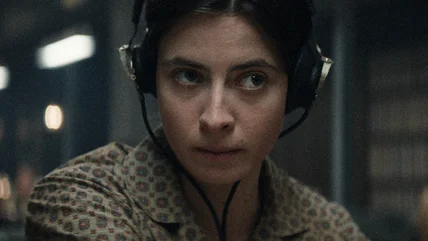
The current controversy over the Motion Picture Association of America slapping Derek Cianfrance’s Blue Valentine with an NC-17 rating, and then repealing it, has once again brought into question the usefulness of the MPAA as a whole. In fact, renowned film critic Roger Ebert goes so far to say that “there are only two meaningful ratings: R and not-R” and has called for a total overhaul of the system because, in his words, “our national standards of taste have changed.”
Ebert cites the example of The King’s Speech, which carries an R rating for “some language.” For anyone who hasn’t seen the movie (and we urge you to check it out) there is only one scene with any vulgar language. And while the one scene does have multiple uses of the F-word, the rest of the movie is tame. Compare that to something like 2012 which was rated PG-13 also for “some language” in addition to “intense disaster sequences.” While there wasn’t much language, director Roland Emmerich (possible spoiler coming up) pretty much ended the world, killing billions of people in the process. So mass genocide gets a PG-13 while The King’s Speech gets an R. That simply doesn’t seem right.
What does Ebert propose we do? And do we agree? Read more after the jump. Read More »
.
Please Recommend /Film on Facebook

Roger Ebert and Gene Siskel defined the televised movie review, so in the wake of the demise of the last version of At the Movies, it is wonderful and appropriate that Ebert is bringing At the Movies back to television. Even better, Roger Ebert Presents: At the Movies will go back to the show’s original home: public television. Hopefully that will ease off some of the pressure that caused the cancellation of the most recent incarnation, which featured AO Scott and Michael Phillips.
Roger Ebert Presents: At the Movies launches in January 2011. All the details are after the break. Read More »

During Steve Jobs keynote at the WWDC earlier today, it was announced that Netflix is developing an app for the iPhone which would allow customers to stream movies on their iPhone.
Following the announcement of the Netflix iPhone app, Pulitzer prize-winning film critic Roger Ebert tweeted that he
“will never, ever, watch a movie on my iPhone.” Ebert’s comment made me wonder — how many of you have, or would ever, watch a movie on an iPhone (or iPhone sized device)?
Personally, I would have loved to have had such an app in my years taking the Muni across town in San Francisco, but others seem strongly opposed to watching movies on a small media device. It’s not like this is anything new, people buy/rent movies throughiTunes and watch them on their phone every day. I’ve never watched a movie, but I have watched television episodes on the device.

In this week’s /Filmcast, David Chen, Devindra Hardawar, and Adam Quigley respond to Ebert’s diatribe against 3D, and reflect, as usual, on the future of the Twilight series. Special guest Joseph Kahn, the director of Torque, joins us for this episode.
Enter to win one of five copies of Yippee Ki-Yay Moviegoer by e-mailing slashfilmcast(at)gmail(dot)com with the words “Bruce Willis Contest” in the subject line. Entries accepted until Sunday, May 9th, 11:59 PM EST.
You can always e-mail us at slashfilmcast(AT)gmail(DOT)com, or call and leave a voicemail at 781-583-1993. Join us next week on Sunday night at 10 PM EST / 7 PM PST at Slashfilm’s live page as we review Iron Man 2.
Download or Play Now in your Browser:
[audio:http://media.libsyn.com/media/slashfilmcast/Slashfilmcastep98.mp3]
Subscribe to the /Filmcast:

Read More »

Pulitzer Prize-winning movie critic Roger Ebert has been extremely vocal of his dislike of 3D movies. This time he’s even venturing outside his home at the Chicago Sun-Times to write an op-ed piece for Newsweek titled “Why I Hate 3-D (And You Should Too)”.
Read More »

Recently Sex Pistols manager and rock impressario Malcolm McLaren passed away, which prompted Roger Ebert to write about his memories of working with McLaren on a film that never fully materialized. In 1977 Ebert worked with McLaren and director Russ Meyer on Who Killed Bambi?, meant to be a punk rock A Hard Day’s Night, but which stalled out while filming.
Now Ebert has released his entire original screenplay online, and it makes quite a little punk rock / mainstream crossover curiosity. Read More »

Roger Ebert has seemingly been everywhere lately. Esquire’s profile on America’s most visible film critic lovingly detailed his life after a battle with cancer that cost Ebert his ability to eat, drink and speak. His written output has become voluminous; Ebert is becoming a major voice not just in film culture, but across many lines of American experience.
Ebert has of late been using a piece of software to speak through his laptop. The voices are limited to just a few robotic options, but a Scottish company called CereProc, makes text-to-speech software with relatively human voices. Drawing on Ebert’s television appearances and his few DVD commentaries, CereProc has built him a new ‘voice’, which he is using publicly for the first time today. Read More »

Hopefully you’ve read Esquire’s very moving and deeply detailed piece on Roger Ebert, which appeared online Tuesday morning. The article opened with a large photo of Ebert as he is today: his face slack after losing his lower jaw, but eyes vibrant and perceptive. Written by Chris Jones, the article peers into Ebert’s life as it is after his battle with cancer left him without the ability to eat or speak. But despite one line that has been taken too seriously by some (“Ebert is dying in increments, and he is aware of it.”) the focus of the article is on the renewed vigor with which Roger Ebert has approached his work in the last few years. It’s an inspiring story; Ebert’s response to the aftereffects of his illness seems to come from a deep love of life and creative energy.
Now Ebert has responded to the article, in a calm and rational blog post that commends Jones for his work, and adds detail to the portrait of the critic’s life. Read More »

Cool Posts From Around the Web: